
Introduction: Why Lemon Pizza Works
Lemon pizza turns the rules of pizza upside down by skipping the heavy tomato base in favor of vibrant citrus that balances richness with brightness. The result? A pie that’s both refreshing and indulgent.
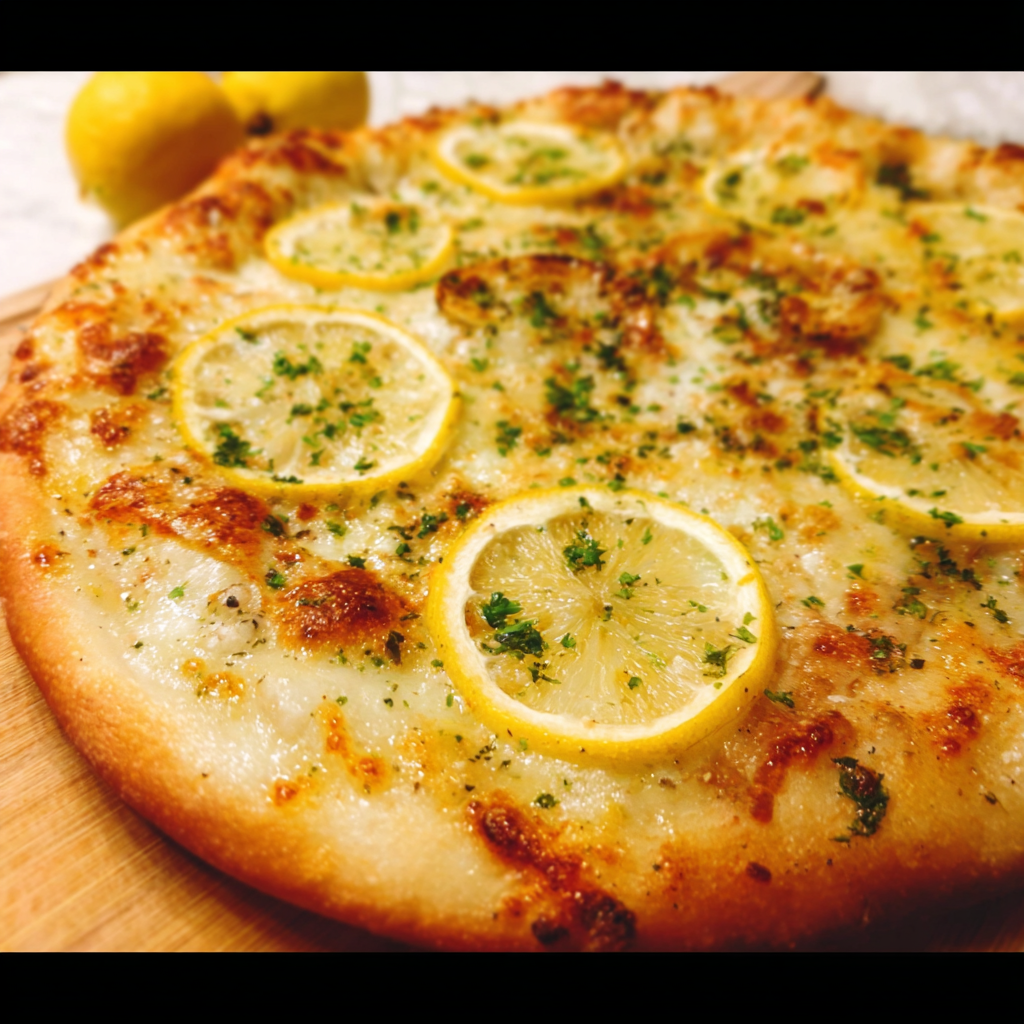
Thin slices of Meyer lemon melt into creamy cheese, releasing fragrant oils that mingle with herbs and salty accents. This style has exploded in popularity among modern food lovers because it’s versatile—you can keep it vegetarian or pair it with prosciutto, goat cheese, or even preserved lemon.
A big part of its appeal is how it manages to be bold and delicate at the same time, delivering layers of flavor without overwhelming your palate.
What Is Lemon Pizza?
At its core, lemon pizza is a white pizza topped with paper-thin slices of lemon—often Meyer lemons for their sweet, floral notes—plus cheeses, herbs, and a few carefully chosen extras. Styles vary widely, including:
- Lemon-Ricotta White Pie – creamy ricotta base, mozzarella, lemon zest, and fresh basil.
- Meyer Lemon & Goat Cheese – tangy goat cheese with salty prosciutto.
- Preserved Lemon Bianca – bold, briny flavor with rosemary.
- Lemon & Greens – arugula or spinach for peppery contrast.
If you’ve never baked with lemons, understanding the difference between lemon varieties is key. Meyer lemons are sweeter and less bitter, while Eureka and Lisbon lemons are sharper and better suited for zest or post-bake squeezes. You can read more about Meyer vs. Eureka differences in this UC Davis guide.
Flavor Profile & Pairings
The magic of lemon pizza lies in balance—combining citrus brightness with creamy cheese and herbal depth.
Best cheeses:
- Whole-milk mozzarella for melty richness
- Ricotta for creamy texture
- Goat cheese for tang
- Parmesan or pecorino for salty umami
Herbs & aromatics:
- Basil, thyme, rosemary, parsley
- Garlic or shallots for savory sweetness
Texture & flavor boosters:
- Pine nuts or pistachios for crunch
- Castelvetrano olives for briny contrast
- Hot honey drizzle for sweet heat
Cooking on a preheated baking steel makes a big difference, giving you a crisp base while keeping the lemon slices tender. Learn more about how a baking steel improves home-oven pizza for restaurant-quality results.
Choosing Lemons: Meyer vs. Eureka/Lisbon
- Meyer lemons – Sweeter, floral aroma, thin peel, minimal bitterness.
- Eureka/Lisbon lemons – More acidic, thicker pith, more bitterness if sliced thick.
When using standard lemons, slice ultra-thin and keep slices minimal. For a softer citrus bite, Meyer lemons are your best friend.
Essential Gear & Oven Setup
You’ll need:
- Baking steel or stone (steel is superior for crispness)
- Pizza peel for launching your pie
- Mandoline slicer for ultra-thin lemon rounds
- Sharp chef’s knife for prepping toppings
Pro tip: Preheat your oven with the steel in place for at least 45 minutes at its highest setting (usually 500–550°F). This ensures a crisp crust and prevents soggy centers.
Core Ingredients
- Pizza dough – 62–70% hydration, ideally cold-fermented for 24–72 hours.
- Olive oil & garlic or whipped ricotta as the base.
- Low-moisture mozzarella as the melting cheese.
- Paper-thin lemon slices (Meyer preferred).
- Fresh herbs like basil, thyme, or rosemary.
- Optional: Prosciutto, olives, nuts, or hot honey.
Prep Like a Pro: Zesting, Slicing, and Reducing Bitterness
- Wash and scrub lemons thoroughly. See the FDA’s guide on properly washing lemons before slicing.
- Remove seeds to avoid unpleasant bites.
- Use a mandoline to create paper-thin slices so the peel softens during baking.
- Limit slices to avoid overpowering the pizza.
- For preserved lemons, rinse well to reduce saltiness.
Step-by-Step: Classic Lemon-Ricotta White Pie
Yield: 1 (12–14-inch) pizza
- Preheat: Place steel or stone in the top third of the oven; preheat at 525–550°F for 45–60 minutes.
- Whip the ricotta: ¾ cup ricotta + 1 tsp lemon zest + pinch of salt + 1 tsp olive oil.
- Prep lemons: 1 Meyer lemon, ends trimmed, thinly sliced, seeds removed.
- Stretch dough: 250–280g ball; dust peel with flour/semolina mix.
- Base aromatics: Light brush of olive oil + minced garlic.
- Cheese layer: 1 cup mozzarella + dollops of whipped ricotta.
- Add lemons & herbs: Arrange slices with thyme leaves.
- Bake: 6–9 minutes until golden and bubbling.
- Finish: Parmesan, fresh basil, chili flakes, optional hot honey drizzle.
Five Delicious Variations
- Meyer Lemon, Spinach & Prosciutto – Spinach for peppery bite; add prosciutto after baking.
- Preserved Lemon, Chèvre & Rosemary – Salty, aromatic, and bold.
- Lemon, Olives & Parmesan – Briny, salty, and bright.
- Asparagus, Lemon & Ricotta – Perfect for spring menus.
- Three-Cheese Lemon Basil – Mozzarella, ricotta, parmesan with hot honey.
Baking Temperatures & Timing
- Home oven: 500–550°F for 6–10 minutes on steel/stone.
- Pizza ovens/grill kits: 700–900°F for 2–4 minutes.
- Bake until the crust is blistered, cheese is bubbling, and lemon slices are translucent.
Troubleshooting
- Too bitter? Slice thinner, use Meyer lemons, or swap some slices for zest.
- Soggy crust? Reduce toppings and preheat deck longer.
- Pale crust? Bake hotter or move rack up.
Make-Ahead, Storage & Reheating
- Dough can be prepped up to 3 days ahead.
- Slice lemons just before baking to keep them fresh.
- Store leftovers in an airtight container for up to 3 days.
- Reheat at 450°F on a steel or in a skillet—avoid microwaving.
Nutrition & Dietary Swaps
- Use part-skim cheese for lighter pies.
- Gluten-free dough works well with the same toppings.
- Vegan cheese alternatives can replace dairy.
Serving Ideas
- Pair with an arugula salad with lemon vinaigrette.
- Serve alongside charred broccolini or grilled artichokes.
- Pair with Sauvignon Blanc, dry cider, or sparkling water with rosemary.
FAQs
Is lemon good on pizza?
Yes—when sliced thin and paired with creamy cheese, it’s bright and balanced.
Do you eat the peel?
Yes, if sliced thin enough; the peel softens during baking.
Meyer vs regular lemons?
Meyer is sweeter and floral; regular lemons are more tart.
How thin should I slice?
Paper-thin—preferably with a mandoline.
Before or after baking?
Slices go on before; zest or juice can be added after.
Conclusion
Lemon pizza is proof that citrus belongs on more than just salads and desserts. By pairing bright, fragrant lemons with creamy cheese, herbs, and a perfectly crisp crust, you get a pizza that feels fresh, modern, and irresistibly good.
